An Existential Struggle: Truth versus Shadow in World Politics
archive


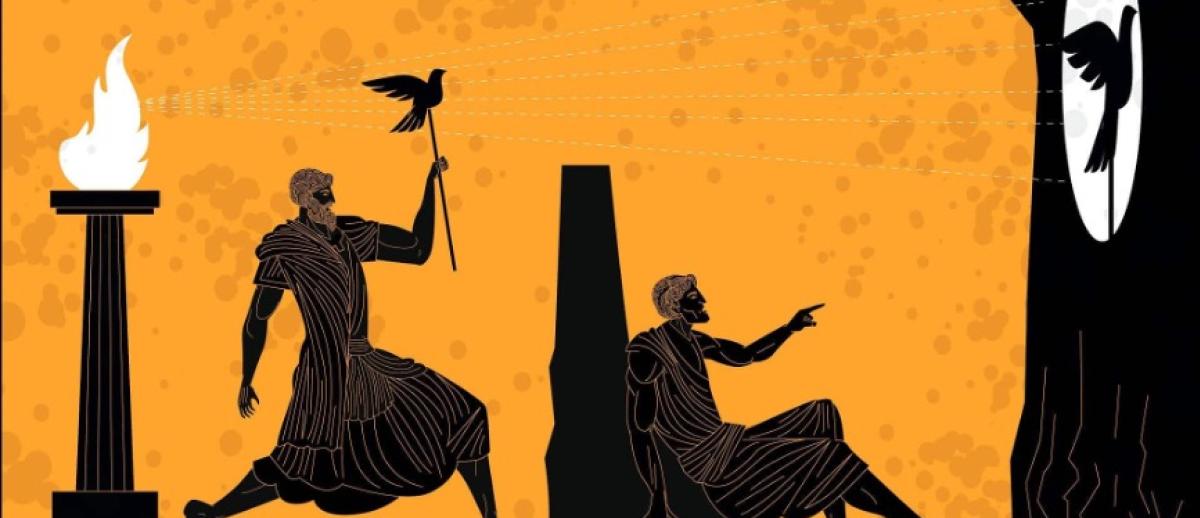
“To them. I said, the truth would be literally nothing but the shadows of the images. That is certain.”
Plato, The Republic
An Existential Struggle: Truth versus Shadow in World Politics
Plato’s Cave and its “Shadows”
Though the subject of world politics is always important, it deserves absolute primacy in 2026. Most worrisome is the steadily growing risk of nuclear war. In essence, national leaders seem less and less able to understand the difference between true causes and mere “shadows.” To help clarify and correct this disjunction, scholars should examine the insights of an ancient Greek philosopher and his metaphorical “cave.”
In The Republic, Plato explains that all decipherable political activity is ultimately “shadow.”1 Taken seriously, this explanation is significant not only for national decision-makers, political philosophers, and military thinkers, but also for anyone trying to make coherent analytic sense of terrorism, war, and peace2. Prima facie, it is significant for anyone who simply wishes to survive on planet earth.
But how shall we proceed with necessary conceptual understandings? First, thinking persons will need to acknowledge that individual needs and values are never discoverable at conspicuous surfaces of intellectual understanding. What will matter most in pertinent political assessment are outcomes they might never have been expected. Though many could understand why they value personal religious attachments, few would be able to connect these preferences to promises of “power over death.” Individuum est ineffable, reminds nineteenth-century poet-philosopher Goethe, author of Faust: “The individual cannot be grasped.”
Many particulars lie beyond Platonic “shadow.” As these originating elements are vague or “opaque,” they represent variously complex investigations. For the United States, a society unaccustomed to bothering with history, law, or challenging ideas (Donald Trump assures his followers that “attitude is more important than preparation”)3, there is little cause to expect knowledge-based inquiries. Still, whatever the anti-intellectual orientation of American “mass”4 - an amalgam that displays intentional disrespect for considerations of “mind” - meaningful explanations of American foreign policies will require concept-based investigations.
Even more than fully-fashioned theories, concepts are fundamental. More specific to ascertaining threats in matters of war and peace, three basic concepts deserve pride of place. Intersecting and subtle, these core notions are shadow, time and truth. But the discovery of relevant meanings will represent a daunting intellectual task, one of the highest possible order.
A “next question” dawns: How shall Americans and others proceed if their own national governance is to be improved, especially in a corrosive world system shaped by wars of aggression and nuclear weapons?5 What can shadow, time and truth teach America’s leaders about the global present and future?6 How shall the United States advance beyond the persistently gratuitous rancor of current policy-making?
To answer thoughtfully, all must begin with the individual human microcosm. In this connection, though generally disregarded and de facto invisible, “power over death” represents the ultimate reward for dutiful political compliance. On its face, there can never be any greater power to confer than a promise of immortality. This is the case whether the promise is open and unhidden or expressed only in whispers, sotto voce.
Personal Faith and the “Hunger of Immortality 7
“I believe,” says Oswald Spengler in his 20th century classic, The Decline of the West (1918-1923), “is the one great word against metaphysical fear.” In this bewilderingly abstract connection, we may still learn from Emmanuel Levinas something of head spinning import: "It is through death," says the twentieth-century philosopher, "that there is time...."8 This means, among other things, that a nation that can seemingly enhance the incomparable promise of personal immortality can also heighten certain “force-multiplying” promises of time.9
But what can such dense abstraction have to do with explaining war and peace? To be sure, these are not easy concepts to understand, especially in the context of Donald Trump’s defiling preoccupation with “shadows.” Nonetheless, no nation so incessantly willing to subordinate truth to “anti-reason”10 can reasonably expect to improve its survival prospects.
These are not easy ideas for scholars or political leaders to unravel. Still, these ideas are more clearly explanatory of America’s existential challenges than political personalities. If temporality is contingent on death - because human mortality puts a "stop" to each individual’s time11 - an antecedent question will need to be posed: “How does one gain power over death12, and what does any such gain have to do with the fate of a particular state or nation?”
What next? Before venturing a proper answer, scholars and leaders should first distinguish between actual or tangible power and the power that lies latent in purported ties to God. From the start, incontestably, humans have sought variously reassuring ties to the sacred.
In world politics, truth often emerges through paradox. Presently, several core truths are being revealed in the US-Israel war against Iran. Here, especially, any cumulative hopes that individual human beings (the “microcosm”) can rise "above mortality" could have critical consequences for the “macrocosm.” 13
At his posthumously published Lecture on Politics (1896), German historian Heinrich von Treitschke observes: “Individual man sees in his own country the realization of his earthly immortality.” Earlier, German philosopher Georg Friedrich Hegel opines in Philosophy of Right (1820) that states represent "the march of God in the world." In the current war against Iran, belligerents on all sides are anxious to “team up” with God.
So, certain widely-cited philosophic views tie loyalty to the state (usually, an unquestioned loyalty) with a promise of “power over death.” By definition, of course, this is a monumental promise, one generally recognized only in the vague “shadows” of military activity. Whenever the capable historian looks beyond such deflecting shadows, he or she discovers no plausible evidence of such a promise being kept. But how could it be otherwise?
Immortality represents an extraordinary and unfulfillable promise, but one that still remains alluringly special.14 During this continuously dissembling “Trump Era,” an American president’s personal “brand” of belligerent nationalism15 ("America First"16) offers deserving "patriots” this preposterous promise. In the end, because it is founded on doctrinal anti-reason, "America First" embraces a vision of time that hastens death at intersecting microcosmic and macrocosmic levels.
Additional nuances warrant competent examination. In all relevant matters, faith and science overlap further with variously coinciding considerations of law. The fearful "deification" of Realpolitik, a transformation of ideology from abstract principle of action to sacred end in itself, drew germinal strength from the doctrine of “sovereignty.”17
First conceived in the sixteenth and seventeenth centuries as a juridical principle of internal order, this doctrine subsequently underwent far-reaching metamorphoses. Incrementally, it became the justifying legal rationale for corrosive “self-help” remedies amid uncontrollable international anarchy. To wit, this is precisely US President Donald Trump’s justification for America’s ongoing war against Iran. Significantly, Trump has extended this implicit justification from issues of jus ad bellum (“justice of war”) to ones of jus in bello (“justice in war”). A clear result of this law-violating extension has been open indifference to humanitarian international law or the law of war.18
Sovereignty and “Power Over Death”
To understand complex policy intersections, we must better understand "sovereignty." Established by Jean Bodin as a juristic concept in De Republica (1576), sovereignty quickly came to be regarded as the supreme power, absolute and above all other forms of law19. In the oft-recited and oft-studied words of Thomas Hobbes' Leviathan: "Where there is no common Power, there is no law."
As to correspondences with time, Hobbes explains why this lawless condition should be called "war” even when there is no “actual fighting.” Because "war consists not in battle only, or the act of fighting, but in a tract of Time....,20" scholars and policy-makers will need to broaden their most fundamental ideas of “war.” Though this would first appear an arcane or esoteric requirement, one without links to “real world” policy-making, the opposite is true.
There is more. When it is understood in terms of modern world politics, the doctrine of sovereignty encourages the refractory notion that states (1) lie above and beyond any legal regulation in their interactions with each other, and (2) act rationally whenever they seek tangible benefits at the expense of other states or the global system as a whole21. Still, amid increasing bitter Trump derangements22, this doctrine now threatens a wholesale collapse of world legal order. Credo quia absurdum, opine Roman philosopher Tertullian: “I believe because it is absurd.”
Time and the Hobbesian “State of War”
Without suitable changes in the Hobbesian "tract of time," the global State of War nurtured by manipulated ideas about sovereignty23 points not only to an immutable human mortality, but also toward death on unprecedented levels. One theme other than war and peace is climate change denial, a witting posture of doctrinal anti-reason. Left unaffected by proper considerations of scientific analysis and refined intellect, such denial could eventually produce another mass extinction event on planet earth24. At that point, by definition, time will have lost all its potentially remediating meanings and death will “inherit” all that still is.
The Barbarism of Specialization
In the end, world politics should be understood as much more than a second-order activity, i.e., as a simple reflection of what is truly important. For now, a constituent American politics continues to draw its own “life” from a vast common emptiness, a collective infirmity that represents the defiling reciprocal of personal fulfillment.
Even in a true American democracy, only “The Few” could ever hope to redeem themselves and the wider world. Inter alia, these self-effacing “souls” would almost certainly remain hidden and silent. Plausibly, in a democracy where education has been increasingly oriented toward narrowly-vocational forms of career preparation, an orientation toward Ortega y’ Gassett’s "barbarous specialization," these residual Few should expect “suffocation by the Mass.”
America’s Trump-accelerated detachment from intellectual life did not emerge ex nihilo, out of nothing. Rather, it was the inevitable result of a society that had abandoned most forms of serious thought. When such a society no longer asked the "big philosophical questions" - for example, "What is the "good" in government and politics"? or "How do I lead a good life as person and citizen"? or "How can I best nurture the well-being of other human beings"? – the deleterious outcome for both national and world politics became almost unstoppable.25
To survive in world politics, all states must finally acknowledge the interrelatedness of all peoples and the universality of authoritative international law26. In part, more Americans will need to become seriously educated, not as well-trained cogs in a reconfiguring industrial machine, but as empathetic and caring citizens of the world. "Everyone is the other, and no one is just himself," cautions Martin Heidegger in Being and Time (1932),27 but this elementary lesson once discoverable in myriad sacred texts is not easily operationalized. It is in this overarching failure of empathic "operationalization" that human civilization has most plainly inscribed its collective fate.
How shall we change all this? Recalling Plato's wisdom in The Republic, how shall we "learn to make the souls of the citizens better?" This is not a question that anyone can answer with catch phrases or empty witticisms. But it is a question that ought still to be put before the American polity.28
Americans in particular will need to get beyond the demeaning banalities of partisan politics, beyond the distracting and murderous “shadows” of what is most genuinely important. Immutably, but often invisibly, most residents of planet earth regard “power over death” as the highest conceivable form of power. Still, it remains unclear just how such ultimate power (a power based on what Freud calls “wish fulfillment”) could be linked purposefully to any nation’s politics and foreign policies.
It’s time for a summation. To best ensure that world politics are dignified, decent and (above all) survivable, constituent states must first learn to distinguish authentic human feelings and behaviors from “shadows.” Once we can begin to understand world politics at their irreducible points of origin, we could finally act to free an imperiled global system of states from the relentlessly lethal grip of belligerent nationalism. In fulfilling this fundamental obligation, informed recollections of Plato’s cave could offer scholars and policy-makers a simple yet indispensable vision of truth.
1) Such “epiphenomenal” understanding was central to Plato's The Republic. In his still-famous parable of the cave, the early Greek philosopher clarifies the distinction between "truth and shadow." See, by this author, Louis René Beres, https://moderndiplomacy.eu/2020/09/08/truth-and-shadow-to-understan See also, at Oxford University Press, Louis René Beres: https://blog.oup.com/2011/08/philosopher-king/
2) In the 17th century, French philosopher Blaise Pascal remarked prophetically in Pensées: "All our dignity consists in thought...It is upon this that we must depend...Let us labor then to think well: this is the foundation of morality." Similar reasoning characterizes the writings of Baruch Spinoza, Pascal's 17th-century contemporary. In Book II of his Ethics Spinoza considers the human mind or intellectual attributes, and - drawing further from Descartes - defines an essential theory of learning and knowledge.
3) This assurance resembles the official Joseph Goebbels party line that “Germany needs leaders with instinct, not intellect.” Said Goebbels at a Nuremberg party rally in 1934: “Intellect rots the brain.” Declared US presidential candidate Donald Trump back in 2016, “I love the poorly educated.” Later, still in “Trump 1,” he claimed Covid19 “will disappear on its own,” ingestion of household disinfectants could help protect Americans from Covid19, that the 18th-century American revolutionary army “quickly took control of all United States airports” and that America should consider using nuclear weapons against hurricanes.
4) Says Karl Jaspers in Reason and Anti-Reason in our Time (1952): "The masses have followed the magicians again and again...Socrates and Plato were the first to take up the struggle against them in a clear awareness of what was at stake."
5) See by this author, Louis René Beres: https://moderndiplomacy.eu/2021/10/24/to-prevent-a-nuclear-war-americas-overriding-policy-imperative/
6) A common aspect to these three core concepts is the inherently vague idea of "soul." Sigmund Freud and Carl Jung thought of "soul" (in German, Seele) as the essence of a human being. Neither Freud nor Jung ever provided a precise definition of the term, but it was not intended by either in an ordinary religious sense. For both, it was a still-recognizable and critical seat of mind and passions in this life. Interesting, too, in present context, is that Freud explained his already-predicted decline of America by express references to "soul." Inter alia, he was disgusted by a civilization so tangibly unmoved by considerations of true "consciousness" (e.g., an awareness of intellect and literature). Freud even thought that a crude American commitment to shallow optimism and material advancement would occasion sweeping psychological misery. Judging, among many other things, by the extent of America's opiate crisis, this prediction was on-the-mark.
7) This succinct phrase, the “hunger of immortality,” is central to Miguel de Unamuno’s Tragic Sense of Life (1921). During my more than fifty years as a Purdue University professor, I often identified this seminal work as the single most important book I had ever read. Interestingly, it was another great Spanish existentialist, Jose Ortega y’Gasset, who came in as a close second.
8) See Emmanuel Levinas, "Time Considered on the Basis of Death" (1976). In another essay, Levinas says: “An immortal person is a contradiction in terms.” Though seemingly obvious, it runs counter to core promises of the world’s principal religions.
9) For an early examination of time's impact on foreign policy decision-making, see, by this author, Louis René Beres, "Time, Consciousness and Decision-making in Theories of International Relations," The Journal of Value Inquiry, Vol. VIII, No.3., Fall 1974, pp. 175-186.
10) For the most probing assessment of this concept, see: Karl Jaspers, Reason and anti-Reason in our Time (1952). The German philosopher clarifies the “fog of the irrational” that bedeviled Germany in the 1930s and 1940s, and later the United States during the still-ongoing “Trump Era.” In a distillation of his grand thought, Jaspers proclaims: “Reason is confronted again and again with the fact of a mass of believers who have lost all ability to listen, who can absorb no logical argument and who hold unshakably fast to the Absurd as an unassailable presupposition….”
11) The charming idea that time can somehow "have a stop" is raised by Indiana writer Kurt Vonnegut Jr. in Slaughterhouse Five (1969).
12) Insightfully, observes Spanish existentialist philosopher Jose Ortega y'Gasset in Man and Crisis (1958): "History is an illustrious war against death."
13) It ought also to be kept in mind that the incremental destruction of biodiversity on Planet Earth is producing a continuous natural climate catastrophe, one that naturalist David Attenborough suggests will likely end in another mass extinction. This means, inter alia, more-or-less predictable synergies between growing catastrophes of the natural world and catastrophes of specifically human misunderstanding. In synergistic interactions, by definition, the cumulative harm (the "whole") is greater than the sum of component sufferings (the "parts").
14) Still, we must consider the contra view of Spanish philosopher Jose Ortega y'Gasset in The Revolt of the Masses (1932). Here, Ortega identifies the state not as a convenient source of immortality, but as the very opposite. For him, the state is "the greatest danger," mustering its immense and irresistible resources "to crush beneath it any creative minority that disturbs it...." Earlier, in his chapter "On the New Idol" in Thus Spoke Zarathustra, Friedrich Nietzsche wrote: "State is the name of the coldest of all cold monsters...All-too-many are born - for the superfluous the state was invented." Later, in the same chapter: "A hellish artifice was invented there (the state), a horse of death...Indeed, a dying for many was invented there; verily, a great service to all preachers of death!"
15) The belligerent nationalism of US president Donald Trump stands in marked contrast to authoritative legal assumptions concerning solidarity between states. These jurisprudential assumptions concern a presumptively common legal struggle against aggression and terrorism. Such a "peremptory" expectation, known formally in law as a jus cogens assumption, had already been mentioned in Justinian, Corpus Juris Civilis (533 CE); Hugo Grotius, 2 De Jure Belli ac Pacis Libri Tres, Ch. 20 (Francis W. Kesey., tr, Clarendon Press, 1925) (1690); and Emmerich de Vattel, 1 Le Droit des Gens, Ch. 19 (1758).
16) See, for example, by this author, at JURIST, Louis René Beres, https://www.jurist.org/commentary/2020/05/louis-beres-america-first-2/; and https://www.jurist.org/commentary/2019/06/louis-beres-america-first/
17) See, on this doctrine, by this author: Louis René Beres, Reason and Realpolitik: US Foreign Policy and World Order (1984).
18) In Trump’s own words: “I don’t need no international law.”
19) We may recall here Thomas Aquinas’ commentary on Augustine: “St. Augustine says: `There is no law unless it be just.’ So the validity of law depends upon its justice. But in human affairs, a thing is said to be just when it accords aright with the rule of reason; and as we have already seen, the first rule of reason is the Natural Law. Thus, all humanly enacted laws are in accord with reason to the extent that they derive from the Natural Law. And if a human law is at variance in any particular with the Natural Law, it is no longer legal, but rather a corruption of law.” See: SUMMA THEOLOGICA, 1a, 2ae, 95, 2; cited by A.P. D’Entreves, NATURAL LAW: AN INTRODUCTION TO LEGAL PHILOSOPPHY (1951), pp. 42-43.
20) Thomas Hobbes argues convincingly that the international state of nature is "less intolerable" than that condition among individuals in nature because, only in the latter, the "weakest has strength enough to kill the strongest." With the spread of nuclear weapons, this difference is plainly disappearing. Interestingly, perhaps, in the pre-nuclear age, Samuel Pufendorf, like Hobbes, was persuaded that the state of nations "...lacks those inconveniences which are attendant upon a pure state of nature...." Similarly, Spinoza suggested that "...a commonwealth can guard itself against being subjugated by another, as a man in the state of nature cannot do." (See: Louis René Beres, The Management of World Power: A Theoretical Analysis, University of Denver, Monograph Series in World Affairs, Vol. 10, No.3., 1972-73, p. 65.)
21) In studies of world politics, rationality and irrationality have now taken on very specific meanings. More precisely, a state or sub-state actor is presumed to be determinedly rational to the extent that its leadership always values national survival more highly than any other conceivable preference or combination of preferences. Conversely, an irrational actor might not always display such a determinable preference ordering.
22) One such derangement is Trump's continuing movement away from cooperative world politics to an exaggerated "everyone for himself" ethos. Says French Jesuit philosopher Pierre Teilhard de Chardin in The Phenomenon of Man (1955): "The egocentric ideal of a future reserved for those who have managed to attain egoistically the extremity of `everyone for himself' is false and against nature."
23) In this connection, notes Sigmund Freud: "Wars will only be prevented with certainty if mankind unites in setting up a central authority to which the right of giving judgment upon all shall be handed over. There are clearly two separate requirements involved in this: the creation of a supreme agency and its endowment with the necessary power. One without the other would be useless." (See: Sigmund Freud, Collected Papers, cited in Louis René Beres, The Management of World Power: A Theoretical Analysis, University of Denver, Monograph Series in World Affairs, Vol. 10 (1973-73), p, 27.) Interestingly, Albert Einstein held very similar views. See, for example: Otto Nathan et al. eds., Einstein on Peace (New York, 1960).
24) See, in this regard, BBC film productions on Nature by Richard Attenborough.
25) See by this writer, Louis Rene Beres, at Princeton Political Review: https://www.princetonpoliticalreview.org/opinion-1/the-temple-of-intellect-higher-meanings-for-american-universities
26) Apropos of this universality, international law is generally part of the law of the United States. These legal systems are always interpenetrating. Declared Mr. Justice Gray, in delivering the judgment of the US Supreme Court in Paquete Habana (1900): “International law is part of our law, and must be ascertained and administered by the courts of justice of appropriate jurisdiction….” (175 U.S. 677(1900)) See also: Opinion in Tel-Oren vs. Libyan Arab Republic (726 F. 2d 774 (1984)). The specific incorporation of treaty law into US municipal law is expressly codified at Art. 6 of the US Constitution, the so-called “Supremacy Clause.”
27) See also the words of French Jesuit philosopher Pierre Teilhard de Chardin in The Phenomenon of Man: "The egocentric ideal of a future reserved for those who have managed to attain egoistically the extremity of `everyone for himself' is false and against nature."
28) "Sometimes," says Swiss playwright Friedrich Durrenmatt, "the worst does happen."



![MP Materials, which operates this rare-earth open-pit mine in Mountain Pass, California, is one of 10 US companies added to China's export control list [File: Steve Marcus/Reuters]](/sites/default/files/styles/small_square/public/images/2026-01-28T223535Z_178008069_RC2LAJAJ37I6_RTRMADP_3_USA-MINING-TRUMP-PRICE-1770293508.jpg?itok=DDF89Uj9)