Duration of Status (D/S) Rule Media Roundup
archive


Duration of Status (D/S) Rule Media Roundup
What is the D/S rule?
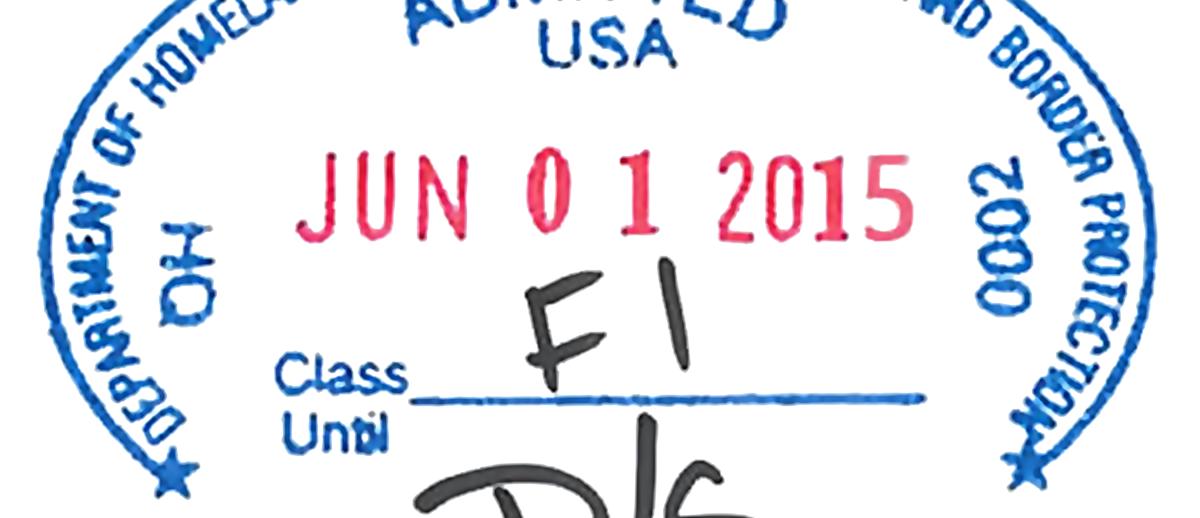
When you enter the U.S. as an F-1 or J-1 student, your Form I-94 should list your Admit Until Date as D/S, which stands for Duration of Status.
Under this current policy, you may remain in the United States as long as you:
- maintain proper enrollment;
- make progress towards your academic program; and
- work only with the proper authorization.
This policy provides students with the flexibility needed to successfully navigate their academic journeys.
Longer History of the D/S rule and SEVIS
From the Carriage of Passengers Act of 1855 until 1978, the institutional impetus in the United States was to encourage students as immigrants. The F visa was officially introduced in 1952. However, the status of the ‘student immigrant’ was used to mark students as distinct from other ‘troublesome’ categories of immigrants such as the Chinese (Chinese Exclusion Act 1882), Eastern Europeans (Emergency Quota Act 1921) and immigrants from other nations, especially Asia (Immigration Act 1924. The origins of the F visa were, thus, situated in a xenophobic context, and eventually students too came to be a part of regulatory imperatives initiated by the US. However, until the neoliberal logics of the university crystallized in the 1980s, students were seen as a welcome body of immigrants.
The duration of status rule was introduced in 1978, which stipulated that instead of renewing their visa status every year, students could be permitted to stay without having to renew their visa for a few years depending on their program of study. Though this change to extend the duration of keeping student status was rolled back, reinstated, and updated between 1978 and 1987, the rule remained the defining backbone of the student visa program until the recent changes.
However, the 1993 bombing of the World Trade Center and the crackdown on ‘illegal immigration’ throughout the 1990s gave birth to the Coordinated Interagency Partnership Regulating International Students (CIPRIS) by the end of the decade. CIPRIS developed the idea of the Student Exchange and Visitor Program (SEVP) as an institution that would scrutinize, surveil, and monitor students and their movements before, during, and after their stay in the US. The 9/11 attacks sealed the fate of SEVP, which then morphed into Student and Exchange Visitor Information Services (SEVIS). The Patriot Act introduced the ideological underpinnings of this institution that identified students as potential ‘terrorist’ threats to the national security of the US. Between 2002 and 2003, after numerous discussions, pilot programs, and debates, SEVIS finally took effect in January 2003. Since then, SEVIS has continued to collect heavy fees from student visa applicants to sustain its work of monitoring and containing student mobility and of surveilling universities for their roles in fostering freedom of thought, expression, intellectual discussion, criticism, and
ideology.
Schedule of Updates
Federal Court Rules in Favor of Coalition Challenging Rule Ending Duration of Status
November 16, 2026
U.S. District Court for the District of Massachusetts ruled in favor of Coalition Challenging Rule Ending Duration of Status.
The court set aside the rule in its entirety under the Administrative Procedure Act and denied the government’s motion for summary judgment. The ruling preserves the longstanding D/S framework and prevents the rule’s new fixed admission periods, extension-of-stay requirements, and restrictions on academic mobility from taking effect.
Federal Court Temporarily Blocks DHS “Duration of Status” Rule
September 14, 2026
The United States District Court for the District of Massachusetts issued an injunction delaying the final rule’s effective date.
Establishing a Fixed Time Period of Admission and an Extension of Stay Procedure for Nonimmigrant Academic Students, Exchange Visitors, and Representatives of Foreign Information Media
September 10, 2026 - Final Rule
Under the new final rule, F students will be admitted to the United States for a fixed period of time instead of duration of status. This fixed period of time is based on the length of a student’s program of study listed on their Form I-20, “Certificate of Eligibility for Nonimmigrant Student Status,” not to exceed four years, plus a 30-day period for arrival and an additional 30-day period for departure. Students who need additional time to complete their current program of study, begin a new program of study, or to engage in post-completion optional practical training (OPT) or science, technology, engineering and mathematics (STEM) OPT must apply for an extension of stay (EOS) with U.S. Citizenship and Immigration Services (USCIS). Alternatively, students may depart the United States and obtain a new period of admission from U.S. Customs and Border Protection (CBP) upon reentry. Students should talk to their designated school official (DSO) to understand their options and the process for extending their authorized period of admission to the United States.
Presidents’ Alliance Opposes Administration’s Rule Ending “Duration of Status”
August, 2026
The coalition files a suit challenging the final rule. See the full complaint here:
https://www.presidentsalliance.org/wp-content/uploads/2026/08/DS-Complaint-Presidents-Alliance-et-al-v.-DHS.pdf
DHS publishes its Final Rule in the Federal Register
July 17, 2026
Sets September 15 as the date on which the rule will come into effect.
Key changes they made included:
1)F and J visa holders entering or returning to the U.S. on or after 9/15/2026 will be admitted with a fixed end date recorded on the I-94 entry record.
2)The “Admit Until Date” (AUD) on the I-94 will be limited to the Program End Date noted on your I-20 or DS-2019, not to exceed 4 years (i.e., whichever is shorter), plus a 30-day grace period following the end date.
3)The F-1 grace period will be reduced from 60 days to 30 days for any student entering or returning to the U.S. on or after 9/15/2026.
OMB completes its review and returns the rule to DHS, which they then publish on July 17, 2026.
DHS submits final rule to Office of Management and Budget.
May 5, 2026
DHS first announced a proposal to change the D/S rule from unspecified to a limited term for admission and sought public comment on its plan: August 28- September 29, 2025
To read the original proposal, click here: https://www.federalregister.gov/documents/2025/08/28/2025-16554/establishing-a-fixed-time-period-of-admission-and-an-extension-of-stay-procedure-for-nonimmigrant