Coercion Capital: Kyilah Terry’s Research into Belarus’s Migrant Recruitment Policies and Authoritarian Mobility Management (AMM)
archive


Coercion Capital: Kyilah Terry’s Research into Belarus’s Migrant Recruitment Policies and Authoritarian Mobility Management (AMM)
In 2021, Belarus curiously transformed itself into a transit migration hub, worsening the European Union’s migration management concerns and heightening tensions within the region. Terry states that President Alexander Lukashenko also used this migration instrumentalization as a mechanism to divert attention away from political dissent, where, in 2020, over 1,000 individuals protesting Lukashenko’s regime were arrested on a single day (Amnesty International, 2020).
Lukashenko positioned Belarus as a safe launchpad to the EU and even advertised its transportation services in various media outlets across the Middle East. Starting in summer 2021, migrants, paying thousands of US dollars, came from all over the world, particularly MENA countries, and landed in Minsk. However, as Terry documents (Jordan Russia Center, 2025) despite the EU’s eastern border proximity to Belarus, the route became increasingly complex and dangerous, involving a conglomeration of state and non-state actors that resulted in extortion, injuries, and deaths. Indeed, Terry states how migrants attempting to cross this new route died in transit due to environmental exposure, (The New York Times, 2021) lack of medical care, and violence between Polish and Belarusian security forces (Human Rights Watch, 2021).
The crux of Terry’s work uses Belarus as a case study to explore the ramifications of weaponized migration. Here, Terry builds from Kelly Greenhill’s critical work, Weapons of Mass Migration, which explores how states use migration processes to weaponize migrants as political and economic tools. Greenhill coined the term "strategically engineered migrations" (SEM) to analyze the coercive migration policy tactics that states implement to obtain political, economic, and/or symbolic gains. Studying how, why, and when states instrumentalize migrants is vital towards minimizing the ever increasing deaths associated with transit migration (International Organization for Migration, 2025).
A portion of Lukashenko’s motivation in using coercive engineered migration policies, or strategies that use migrants and refugees as bargaining tools to coerce governments into some sort of geopolitical or economic concessions, may be to remove the EU sanctions that were placed on Belarus after Lukashenko’s 6th presidential term. This type of manipulation is particularly useful for states aiming to achieve goals where global power imbalances would ordinarily inhibit “weaker” states’ abilities to engage with “stronger,” often Global North states. The use of migrants also illuminates the “hypocrisy cost” liberal democracies incur when threats of im/migration produce restrictive mobility policies that clash with existent human-rights commitments. Other research (POMEPS) similarly finds that states willingly agree to be “blackmailed” if it aligns with their domestic and international policy goals, such as limiting migrant entry. This raises the question for further exploration: How has migration been used by various authoritarian regimes to solidify regime control?
Beyond Belarus, there has been a global proliferation of states instrumentalizing migrants and refugees, including Daniel Ortega and Rosario Murillo’s use of transit migration in Nicaragua (El País, 2024) as a lucrative source of revenue, Muammar Gaddafi’s demands for financial compensation (BBC News, 2010) to prevent African migration into the EU, and Recep Tayyip Erdoğan’s leverage of Syrian refugees for EU funding and political concessions (Bic-RHR, 2020)
Terry’s curiosity, however, rests with how Belarus is “not merely exploiting an existing migration crisis but actively manufacturing itself as a transit state and creating an entirely new migration route from the MENA region to Europe.” However, more research is needed to further explore the idea of the transit state. Currently, there exists no single, unified understanding of a transit state yet a substantial amount of work (Collyer et al., 2010) examining transit migration. Developments on the operational definitions of “the transit state” are needed to fully understand the mechanisms and processes a state employs to transform itself into a state weaponizing migration.
By partnering with private agencies, minimizing bureaucratic measures associated with visa applications, and providing packaged transportation deals, Belarus is moving beyond “a migration industry” (Gammeltoft-Hansen & Sørensen, 2013) to continuously manipulate movement for its own economic and political gains. And, although movement through Belarusian migration corridors has slowed, analyses into its migration policies remain critical as this type of instrumentalization could be adopted by other regimes looking to benefit from the precarity associated with transit migration while gaining geopolitical advantage against other states.
Where to Next: Authoritarian Mobility Management (AMM)
The discussion with Kyilah Terry on Belarus catalyzed a deeper, comparative intellectual investigation regarding how authoritarian governments manipulate movement. To explore this, Kyilah Terry, Kai Thaler, and I developed an inductive conceptual typology called authoritarian mobility management (AMM), soon to be featured in one of the Journal of Ethnic and Migration Studies’s 2026 special issues.
AMM is defined as the strategic regulation, facilitation, or obstruction of internal and cross-border movement by an authoritarian regime to consolidate authority, manage opposition, and extract political or economic returns. Using AMM, we examine how regimes combine restrictive or permissive policies toward citizens and noncitizens, thereby capturing systematic variation that existing migration and authoritarianism literature have not fully explored.
Under AMM, we identify regimes as containers when they restrict both citizens’ exit and noncitizens’ entry. Mobilizers, by contrast, represent the opposite end of the mobility spectrum and actively encourage movement into their borders while allowing citizens to leave (mostly) without barriers. Gatekeepers limit cross-border movement, but do not prohibit citizens from exiting, distinguishing them from container states. Finally, facilitators represent a new form of mobility management: they encourage international entry while restricting citizens’ movement both abroad and within their own territory. The figure below illustrates our typology.
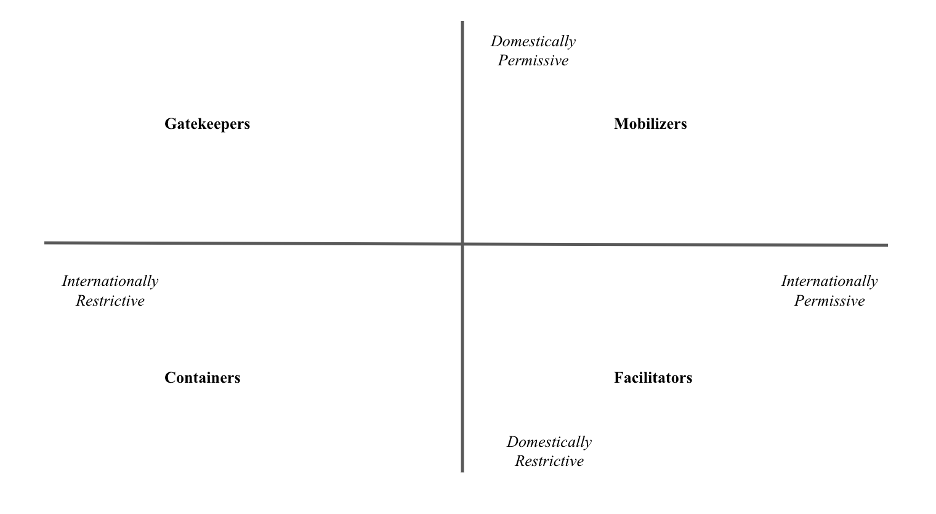
Figure 1: Authoritarian Mobility Management
Building from Terry’s research, we identify Belarus as acting as a mobilizer state, a state that promotes cross-border movement into their borders while also not placing strict controls on citizens’ exit or internal mobility. Here, mobilizing states understand mobility as a strategic resource, leveraging migrants, often primarily transit migrants, for geopolitical and economic benefits. This strategy is also particularly attractive to authoritarian regimes confronting demographic decline, labor shortages, and economic stagnation.
Terry’s research (Geopolitical Monitor, 2022) proves how Belarus illustrates this mobilizing logic. Under Lukashenko, Belarus’s migration policies have welcomed international entry, minimized constraints on transit movement, and tolerated citizens’ emigration. Because of a decline in the population, increased emigration of skilled workers, and economic stagnation, there exist more domestic pressures. Consequently, Lukashenko’s regime has thus lowered entry barriers for foreign workers and short-term migrants, particularly from the Middle East and South Asia. Encouraging citizens’ exits has also served Belarus as a targeted safety valve, allowing dissenters the ability to leave (Michel et. al, 2023).
We then examined other authoritarian governments to compare against Belarus’s policies. We explored how North Korea represents a container state, Nicaragua as a facilitator, and China as a gatekeeper state. In North Korea, the Democratic People's Republic of Korea (DPRK), led today by Kim Jong Un, implements extensive entry bans, visa constraints, and quotas.
Securing a travel permit to the DPRK requires a series of long bureaucratic processes overseen by the Korean Ministry of Foreign Affairs, National Security Department, and the State Security Department. In turn, visitors are rarely allowed into the country, and only Russian citizens can enter North Korea without special permission. Meanwhile, North Korean citizens’ exit and reentry are heavily monitored and restricted. North Koreans have the ability to apply for border area access by purchasing a passport and a visa, but most North Koreans rarely leave their hometowns since internal mobility is so heavily monitored.
We found that Nicaragua represents a facilitator, encouraging international transit migration through its borders while heavily monitoring and restricting citizens’ exits. Here, we classify the Ortega-Murillo regime as a facilitator through its recent policies encouraging transit migration for economic profit along with its recent restrictions against citizens’ exit. Between 2020-2024, Nicaragua engaged in what Shalaby and Thaler (2026) call transit migration entrepreneurship, capitalizing on migrants’ desire to reach nearby countries by constructing a revenue-seeking transit migration industry. Earning millions of US dollars, Nicaragua garnered substantial profit from developing an industry around transit migration (Divergentes, 2025) by dropping entry visa requirements, enacting new policies and constitutional provisions around migration, and establishing partnerships with private companies to move migrants through Nicaragua. This case is similar to Belarus in that an industry was actively created, but unlike Belarus, Nicaragua’s recent securitization efforts prevent its citizens’ interstate and outward movements. With one report documenting 90% of Nicaraguans feeling spied upon (El País, 2025a) the government’s recent increase in surveillance measures have prevented people from safely exiting the country. To further disincentivize citizens’ exits, the Ortega-Murillo regime has started charging individuals seeking reentry into the country $6,000 or more and demanding $25,000 from businesses (El País, 2025b) to allow their employees to return. Here, internal movement has been dramatically reduced while paradoxically Nicaragua has opened its borders for temporary international migrants.
In examining countries that act as gatekeepers, or states that restrict international movement into their borders while not actively restricting nationals’ exits, we believe China represents this type of migration governance logic. The Chinese government has depended on internal migration movements to assist with economic growth while China’s vast global economic presence also encourages Chinese emigrants’ participation in foreign labor markets. Chinese citizens travel abroad in large numbers, especially for education and tourism, but emigration and cross-border labor migration are regulated through passport controls, exit permissions, and extensive surveillance. This liberal domestic policy contrasts with international entry which is placed under greater surveillance with limited avenues to secure permanent residence or citizenship. Here, long-term immigrant settlement is actively discouraged which is reflective of the government’s concerns about external political influence.
Our original discussion with Kyilah Terry about Belarus represents the initial conversations we had in developing AMM. We recognize that AMM represents a model that captures different mobility, security, and migration policy configurations which can overlap and vary across periods of shifting policies. We hope that AMM offers scholars a launching point to further investigate how, when, and why authoritarian regimes manipulate migration and mobility policies.
Amnesty International. “Belarus: More Than 1,000 People Arrested in a Single Day of Peaceful Protests Amid Escalating Repression of Rights.” 9 Nov. 2020, https://www.amnesty.org/en/latest/press-release/2020/11/belarus-more-than-1000-people-arrested-in-a-single-day-of-peaceful-protests-amid-escalating-repression-of-rights/.
BBC News. “Libya’s Gaddafi Warns EU over ‘Black Europe.’” BBC, 31 Aug. 2010, https://www.bbc.com/news/world-europe-11139345.
Bic-RHR. “Turkey and the Weaponization of Syrian Refugees.” https://www.bic-rhr.com/research/turkey-and-weaponization-syrian-refugees.
Collyer, Michael, Franck Düvell, and Hein de Haas. “Critical Approaches to Transit Migration.” Population, Space and Place, 2010, https://heindehaas.org/wp-content/uploads/2015/05/collyer-duvell-de-haas-2010-ppp-critical-approaches-to-transit-migration.pdf.
Cornell University Press. Weapons of Mass Migration: Forced Displacement, Coercion, and Foreign Policy, by Kelly M. Greenhill, https://www.cornellpress.cornell.edu/book/9781501704369/weapons-of-mass-migration/.
Divergentes. “Orteguismo Makes Millions from Safe Passage Business for Irregular Migrants to the United States.” https://www.divergentes.com/orteguismo-makes-millions-from-safe-passage-business-for-irregular-migrants-united-states/.
El País. “Ortega Regime Turns Nicaragua into Gateway for Irregular Migration to the United States.” 23 June 2024, https://english.elpais.com/international/2024-06-23/ortega-regime-turns-nicaragua-into-gateway-for-irregular-migration-to-the-united-states.html.
---. “Ortega’s Border Business: $6,000 to Be Able to Return to Nicaragua.” 4 Oct. 2025, https://english.elpais.com/international/2025-10-04/ortegas-border-business-6000-to-be-able-to-return-to-nicaragua.html.
---. “Revolutionary Surveillance: 90% of Nicaraguans Feel Spied Upon.” 8 Sept. 2025, https://english.elpais.com/international/2025-09-08/revolutionary-surveillance-90-of-nicaraguans-feel-spied-upon.html.
Gammeltoft-Hansen, Thomas, and Ninna Nyberg Sørensen, editors. The Migration Industry and the Commercialization of International Migration. Routledge, 2013, https://www.routledge.com/The-Migration-Industry-and-the-Commercialization-of-International-Migration/Gammeltoft-Hansen-NybergSorensen/p/book/9780415623797.
Geopolitical Monitor. “Migrants as Coercion Capital: Belarus’ Role.” https://www.geopoliticalmonitor.com/migrants-as-coercion-capital-belarus-role/.
Human Rights Watch. “‘Die Here or Go to Poland’: Belarus’ and Poland’s Shared Responsibility for Border Abuses.” 24 Nov. 2021, https://www.hrw.org/report/2021/11/24/die-here-or-go-poland/belarus-and-polands-shared-responsibility-border-abuses.
International Organization for Migration (IOM). “2024 Deadliest Year on Record for Migrants, New IOM Data Reveals.” https://www.iom.int/news/2024-deadliest-year-record-migrants-new-iom-data-reveals.
Jordan Russia Center. “Belarus’s Coercion Capital: Migrant Recruitment for Strategic Ends.” https://jordanrussiacenter.org/blog/belaruss-coercion-capital-migrant-recruitment-for-strategic-ends.
The New York Times. “Belarus-Poland Border Migrant Crisis (Live Updates).” 17 Nov. 2021, https://www.nytimes.com/live/2021/11/17/world/belarus-poland-border-migrants.
POMEPS. “The Donor Side of Refugee Rentierism and Migration Management Aid.” https://pomeps.org/the-donor-side-of-refugee-rentierism-and-migration-management-aid.
Thaler, Kai, Alena Shalaby, and Kyilah Terry. Journal of Ethnic and Migration Studies, forthcoming, 2026.