Gender, Militarization, and the Japanese Self-Defense Forces: A Conversation with Remi Kodamaya
archive


Gender, Militarization, and the Japanese Self-Defense Forces: A Conversation with Remi Kodamaya
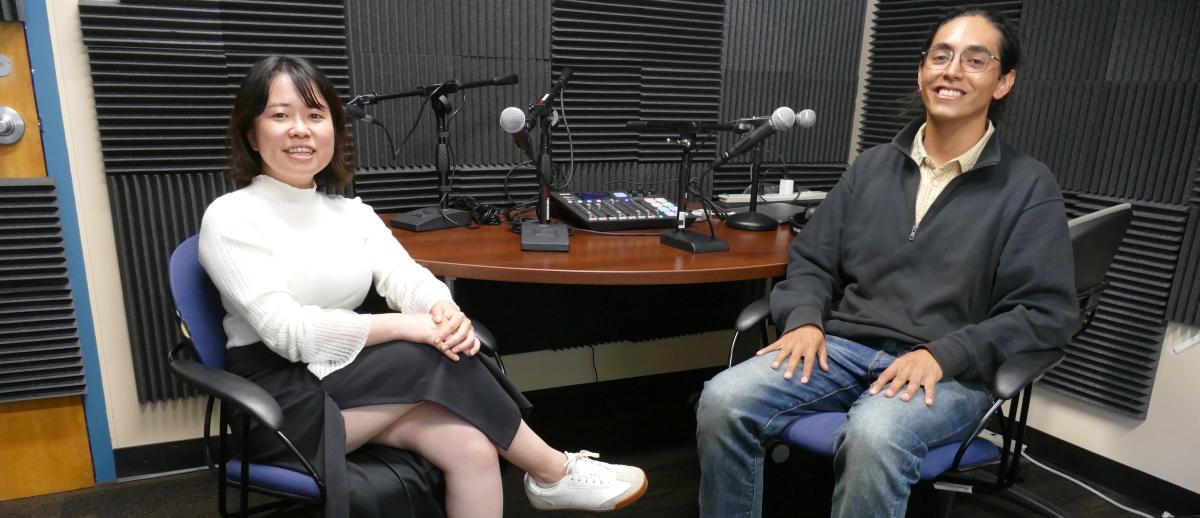
This piece offers an in-depth account of a conversation with Dr. Remi Kodamaya, postdoctoral researcher at Hitotsubashi University and inaugural guest of the Arts Revolt Forum!, co-organized by UC Santa Barbara's Resistance, Autonomy, Liberation (RAL) Research Cluster and East Asia Center. Drawing on Dr. Kodamaya's research on contemporary military masculinities within Japan's Self-Defense Forces (JSDF), the text examines the institution's ongoing identity crisis as reflected in its public relations and recruitment efforts, persistent social and legal controversies surrounding the JSDF, and its recent shift toward a more combat-oriented posture — situating these themes within broader questions of gender, militarism, and national identity in contemporary Japan.
The full podcast can be accessed at the bottom of this essay.
The Research Cluster ‘Resistance, Autonomy, Liberation” (RAL) fosters collaborative research projects that span the humanities and social sciences, the past, present and future among scholars associated with UC Santa Barbara and institutions around the globe whose work mobilizes the cluster’s critical lenses.
The JSDF occupies a space of profound contradiction - a military organization that is legally forbidden from being a military. This "ontological crisis," as identified by Dr. Kodamaya, is the defining feature of Japan’s post-war security apparatus. Under the strictures of Article 9
of the Japanese Constitution, the JSDF is a force that possesses the machinery of modern warfare yet remains professionally and psychologically "under-legitimized." It is an army in a state of perpetual purgatory, caught between its functional reality as a defensive power and its legal status as a non-entity.This identity crisis is exacerbated by the pervasive presence of the United States military. Dr. Kodamaya employs the provocative metaphor of "castration" to describe the psychological weight of this arrangement. Historically, this has stifled the development of a native Japanese military masculinity, leaving the JSDF to navigate a landscape where they are the "protectors" who are themselves perpetually protected and constrained.
To survive within this contradiction, the JSDF has developed a two-faced public relations strategy that projects different images to different audiences. For the "enthusiasts"—the predominantly male demographic already captivated by militarized popular culture—the organization presents a hyper-masculinized face. However, when addressing the broader public, the JSDF pivots to a different aesthetic. By utilizing feminine imagery, childish animation, and depictions of women and children, the organization attempts to dissolve public anxiety. By adopting ostensibly progressive or non-threatening traits—such as the narrative of gender equality used to attract recruits amid a demographic crisis—the JSDF can maintain its traditional hierarchies while appearing modern and inclusive.
For three decades, the JSDF sought legitimacy by embracing the role of the "demasculinized" protector, centering its identity on disaster relief and humanitarian missions. This "peacebuilding masculinity" was a deliberate attempt to break the mirror of the Japanese Imperial Army, the "Old Other" that haunted memories of World War II. By detaching military service from the act of combat, the JSDF constructed an image of the soldier as a civil servant—a helper in a uniform who provided a sense of safety without the threat of violence.
The year 2022 marked a tectonic shift in this delicate balance. Under the administration of Prime Minister Kishida, Japan initiated a dramatic pivot toward a combat-oriented posture. The policy changes were historic: an increase in the defense budget from its traditional 1 percent cap to 2 percent of the national GDP, and the approval of the "three documents"—the National Security Strategy, the National Defense Strategy, and the Defense Buildup Program. Most significantly, the formal adoption of "counter-strike capability" signaled a definitive departure from the strictly defense-oriented policies of the post-war era. This institutional re-arming is driving an internal transition from the disaster-relief identity toward a "combat-oriented" masculinity. The primary mission is no longer merely to assist after a catastrophe, but to prepare for war. Readiness is no longer defined by the speed of a rescue mission, but by the lethality of a strike, prioritizing national defense as the organization’s singular, defining purpose.
The human cost of this shift toward a "hardened" combat identity is laid bare in the sexual harassment case of Gonoi Rina. Dr. Kodamaya’s analysis suggests that as the JSDF prioritizes war readiness, the pursuit of a "tough" military culture has led to the active legitimization of harassment. Violence and abuse are not merely overlooked; they are justified as necessary components of a culture prepared for the rigors of combat. In this logic, the protection of the nation becomes a higher calling that renders the safety and dignity of individual female service members secondary.This environment creates a new form of "othering" within the ranks. As the organization embraces a more traditional, exclusionary masculinity, women are viewed as obstacles to, or distractions from, the core mission of war readiness.
The transition from a "peacebuilding" force to a combat-oriented one is fueled by a fundamental shift in the logic of othering. Historically, the JSDF defined itself in opposition to the Imperial Army of the past and the dominant U.S. forces of the present. By distancing themselves from these images of the mid-20th century, they could maintain their pacifist credentials. However, as the memory of World War II fades, the need to define themselves against the past has weakened.In the current volatile security environment of East Asia, the "New Others" have emerged: Russia and China. This shift allows the JSDF to discard the disaster-relief mask and embrace a new masculine identity without the previous burden of historical shame.
Please listen to the full podcast interview HERE



![MP Materials, which operates this rare-earth open-pit mine in Mountain Pass, California, is one of 10 US companies added to China's export control list [File: Steve Marcus/Reuters]](/sites/default/files/styles/small_square/public/images/2026-01-28T223535Z_178008069_RC2LAJAJ37I6_RTRMADP_3_USA-MINING-TRUMP-PRICE-1770293508.jpg?itok=DDF89Uj9)