The Coup Trap
archive


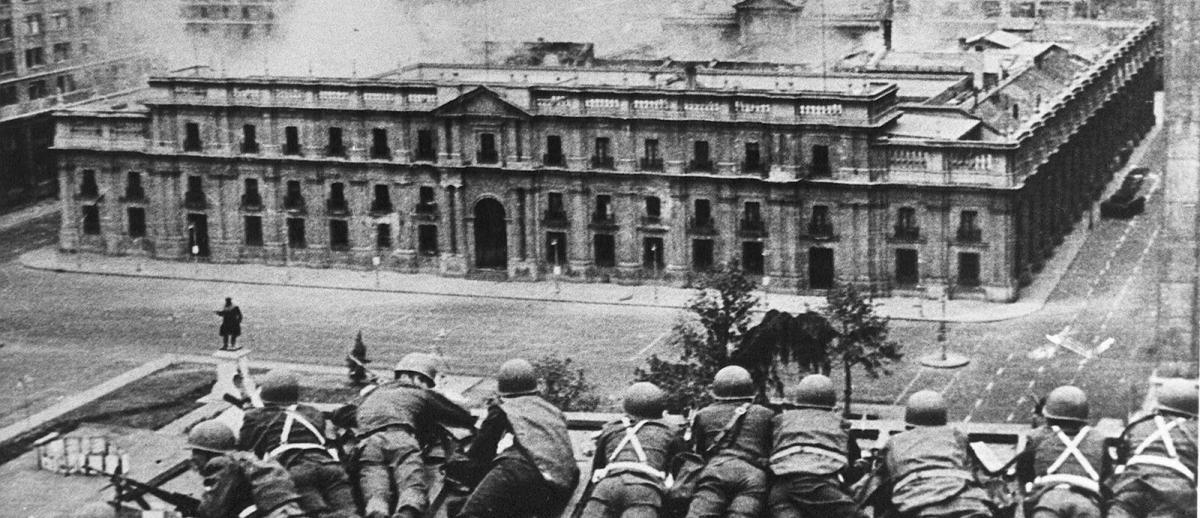
The Coup Trap
Some states find themselves experiencing repeated successful coups. States that have had a prior history of coups are much more likely to experience future coups, this is the “coup trap” (Belkin & Schofer, 2003; Londregan & Poole, 1990). The literature provides evidence that the coup trap is a cross-national pattern (O’Kane, 1981). There are specific qualities of states, such as economic development (Barracca, 2007; Galetovic and Sanhueza, 2000) and competitive elections (Hiroi & Omori, 2013; Jackman, 1978) that affect the likelihood of coups; unless those qualities change, those states will consistently find themselves at a higher risk for coups. Those coups in turn increase the likelihood of future coups, creating a negative cycle.
Civilian vs Military Rule
States that experience military coups always experience some amount of time under military rule. Most cases of military rule are brief, there are a few reasons a military may return power to civilians (Finer, 1985). This can be the choice of the military due to a belief in the norm of civilian rule, concerns about military efficacy, or the difficulty of rule. It can also be induced by outside events, such as a sustained resistance from the civilian population or failure during an international conflict (Finer, 1985). Although militaries return power quickly in most cases, this is not universal; some hold on to power for many years. This occurred in Turkey under Kenan Evren, Egypt under Abdel Fattah el-Sisi, and Chile under Pinochet. In the case of Turkey, the military junta held power from 1980-1989. They formed the “National Security Council,” in which General Kenan Evren was the chief of the general staff for the first two years and the chairman for the next 7. For this entire time, the general was the head of state and made sweeping policy changes to the constitution. This is an example of a military leader who was in complete overt control for a prolonged period.
Even when power is returned faster, the military often chooses to make long-lasting changes in government policy when they are in power. Junta members may choose to become involved in politics even when they officially return power. The military can influence the civilian government in a variety of ways. After a coup, the military is in a position of power to instate changes that permit continued influence. An example of this is South Korea after the 1961 coup. In 1962, the junta began the process of making a new constitution for civilian rule, but it made sure it had members of the junta on the committee to create the document. The result was the creation of the DRP party, which military officials led. This party of former military officers turned politicians was in power until 1980 (Danopoulos, et al, 2019). Politicized militaries are not exclusive to post-coup states; however, it does look different in them. The United States has a long history of military subservience to civilian rule, and yet the military is still politicized (Holitisti 2002). In the United States, the major way this takes form is in army officers identifying with political parties. This looks different in states with active militaries that have had coups in the past. In the Middle East, most states that were not under a monarchy experienced some revolution led by military officers in the early to mid-1900s. This includes Iraq, Turkey, Syria, and Egypt, among others (Kamrava, 2000). The first three of these all experienced decades of repeated coups. The thread is the desire for political change and the belief that only the military is capable of that change. This can occur under politicized, interventionist militaries.
In this project, I focus on civilian leadership regardless of whether that leadership is democratic or not. I do so because military rule is unique even among types of authoritarianism. Military rule is characterized by instability, human rights violations, and more frequent civil wars (Kandeh, 1996; Geddes et al., 2014; Aka, 2002). These occur at higher rates under military rule than under civilian rule, even in authoritarian civilian rule. Military regimes have shorter lifespans than any other regime type, including autocratic types (Geddes, 1999). They also experience rebellion against the regime's leader at higher rates than other authoritarian regime types (Franz & Ezrow, 2011), often from other military leaders. Unlike many other autocratic regime types, military rule does not usually represent the interests of the wealthy or other powerful groups in the state (Nordlinger 1977). This is reflected in their economic policy, which does not favour entrenched wealthy elites as other autocratic regimes tend to (Geddes et al., 2014). This evidence suggests military rule is unique in three ways: it has specific negative outcomes, it is frail, and it is autonomous from wealthy societal powers.
Coup Risk
Coup risk is not a new topic in civil-military relations. A large portion of this literature discusses coup risk in relation to counterbalancing through institutions, also known as coup-proofing (De Bruin, 2020; Quinlivan, 1999; Rittinger & Cleary, 2013). There are three different areas a leader may focus on when coup-proofing. Not all leaders will do all of these, and some may find more success in specific methods. The first coup-proofing method is targeting the military itself, which can include “(1) targeted military spending, (2) personnel policies (including officer rotations, purges, and selective promotions), (3) political socialization, and (4) multiple and overlapping units” (Rittinger & Cleary, 2013, p 410). A second form of coup-proofing is coup rhetoric, which primes the public for the possibility of a coup through speeches and discussion. Possible plotters are painted as undemocratic enemies (Rittinger & Cleary, 2013). A third form of coup-proofing is the exploitation of special loyalties; these loyalties could be tribe, religion, or family-based (Quinlivan, 1999). An example of this would be Saddam Hussein placing Tikriti people in positions of power during his rule in Iraq. Most of the literature I have found that discusses coup-proofing focuses on the military aspects; these portions of coup-proofing seem to be the most universal across time and space (Böhmelt & Pilster, 2014; De Bruin, 2020; Sudduth, 2017).
Alongside the discussion on the methods of coup-proofing a state, there is also the question of how effective these strategies are at preventing coups. Some arguments say coup-proofing can be effective, but loses effectiveness at the point where the two equal counter-balancing forces are raised (Böhmelt & Pilster, 2014). Others argue that coup-proofing can be utilized by leaders when there is a low risk of a coup, but can trigger a coup if used when the risk is already high (Sudduth, 2017). De Bruin (2020) checks to see if counterbalancing is effective; they use an original dataset and process tracing in individual coup cases. They find that counterbalancing is effective for improving the chance of regime survival. De Bruin argues that officers consider three factors when deciding whether to participate in a coup: the likelihood it will succeed, the costs of doing it, and the costs of using violence against fellow officers to stop it (De Bruin, 2020). Singh (2014) discusses a similar line of thinking and argues that the most important factor in a coup's success is whether the coup makers can convince other military members that the coup will be successful. Sometimes coups that shouldn't succeed do, and coups that should be successful fail. His argument is focused primarily on when the coup is actively occurring (Singh, 2014). Most of the literature that looks at the efficacy of coup-proofing focuses on the military aspects of coup-proofing, which are the most widespread as well.
Another aspect of analyzing coup risk is at a structural level. Belkin & Schofer (2003) look at regime vulnerability to the military based on background factors. Previous coups, the strength of civil society, and regime legitimacy are three variables that increase coup risk. These three are theoretically linked by clear mechanisms, able to be measured in a large N sample, and are all background reasons that increase coup risk. They found that no other variables discussed in the coup risk literature satisfied all three of these qualifications (Belkin & Schofer, 2003). Using these variables, they created a measure that was a strong predictor of coups in a cross-national data set; they were also able to use this measure to predict coup-proofing. There was another structural measure before theirs, this one focused on the violent change of regime after war (Bueno de Mesquita et al., 1992). Violent changes in regime are often, although not always, coups. They checked on how the outcome of the war affects the likelihood of violent regime change. They found that initiators of war who lose are at high risk and initiators who win are at very low risk (Bueno de Mesquita et al., 1992). They also tested prewar coups as a variable to check for the validity of their argument and found no relationship, but they did not control for counterbalancing. Belkin & Shofer (2003) check their test with specific reference to coups and argue that their measure is biased because states that have had coups in the past will often counterbalance, which then reduces their coup risk.
Aside from measures, there are also qualitative arguments on structural coup risk. Singh (2022) discusses the recent resurgence of coups, especially in Africa. During the 1990s and early 2000s, there was an international decline in both coup attempts and successful coups, but in the past decade, we have seen those numbers rising again. Many of the states that are having coups are states that have had coups in the past. He argues that the key variable that affects this change is international pressure. During the time coups were less common, there were strong international anti-coup norms; Western powers, especially, were making credible threats to sanction or otherwise punish states that had coups. This is not happening consistently anymore, and other international organizations or states are not doing anything to punish them or even sometimes rewarding them (Singh 2022).
Where am I adding to this discussion? Previous literature has not considered the specific strategic challenges that civilian leaders face when trying to disrupt a long line of military coups. States in coup traps typically do have periods of civilian control; this is true of Turkey, for example, in between the 1970 and 1981 coups, there was a period of civilian control. But these tend to be short-lived, and they are at the mercy of a military that permits their existence. This is true in Turkey as well as many other states that have experienced a coup trap, like Pakistan and Iraq. So there is the possibility of studying variation within a single case. Literature suggests that when coup risk is very high, already coup-proofing can just trigger another coup (Sudduth, 2017). So, a new civilian leader in a state with an active military is often in a precarious situation. They cannot just act like an established leader would. So my puzzle is in the cases that these civilian leaders are successful, what do they do to reduce coup risk, and how is it different from what the failed civilian leaders do? Some examples of previously coup-trapped states that have come under civilian rule are Turkey, Syria, Iraq, Pakistan, and Haiti. I am interested in Turkey because it is a strong case study, and it is possible to go there and do field research. In the future, I would like to study Syria and Iraq more closely as well, even if I cannot go there in person.
Aka, P. C. (2002). The military, globalization, and human rights in Africa. New York Law School
Journal of Human Rights, 18(3), 361–438.
Belkin, A., & Schofer, E. (2003). Toward a structural understanding of coup risk. Journal of
Conflict Resolution, 47(5), 594–620.
Bereketeab, R. (2022). Challenges of transition from military to civilian rule in Sudan. In Current
developments, peace and stability in the Horn of Africa (pp. 85–104). Palgrave Macmillan.
Geddes, B., Wright, J., & Frantz, E. (2014). Military rule. Annual Review of Political Science, 17,
147–162.
Hartlyn, J. (1984). Military governments and the transition to civilian rule: The Colombian
experience of 1957–1958. Journal of Interamerican Studies and World Affairs, 26(2), 245–281.
Ijomah, B. I. C. (2000). Nigeria’s transition from military to civilian rule: An overview. Journal of
Political and Military Sociology, 28(2), 293–310.
Kandeh, J. D. (1996). What does the “militariat” do when it rules? Military regimes: The Gambia,
Sierra Leone, and Liberia. Review of African Political Economy, 23(69), 387–404.
Said, A. (2012). The paradox of transition to “democracy” under military rule. Social Research:
An International Quarterly, 79(2), 397–434.